Reader story · Healthy aging
"I Froze on My Daughter-in-Law's Name at Thanksgiving." Why the Word Is Still There
Your memories are not gone. The path to them just gets slower. What Linda, 67, learned, and the 10-second morning habit she uses now.

Last Thanksgiving, Linda was passing the sweet potatoes when she turned to thank her daughter-in-law. "I opened my mouth and nothing came out," she says. "I have known Rachel for twelve years. I could see her face, I could hear her laugh. And her name was just gone."
Her grandson laughed and said, "Grandma, it's Rachel!" Everyone smiled. Linda smiled too. "But I went to the kitchen afterward and stood by the sink for a minute," she says. "I was scared. My mother started like this."
It came back to her at three in the morning, the way these things do. After that she started noticing it everywhere: the word on the tip of her tongue at church, walking into the laundry room and forgetting why, reading the same paragraph twice.
"That's just getting older. Nothing you can do."
At her next checkup, Linda told her doctor. He asked a few questions, said it sounded normal for her age and told her not to worry. "That's just getting older," he said.
"I know he meant well," Linda says. "But 'nothing you can do' is a hard thing to hear when you're 67 and you want to keep up with your grandkids." She did what a lot of people do. Crossword puzzles. A brain-game app on her phone. A bottle of pills from the drugstore that she stopped buying after two months.
Then her daughter sent her an explanation that, she says, "finally made sense of it."

Your memory is a library, not a leaky bucket
Picture your memory as a big library. Every name, face and recipe you know is a book on a shelf. With age, the books do not disappear. What changes is how fast the request gets to the right shelf.
Inside the brain, that request is carried by chemical messengers. One of the most important for memory and attention is called acetylcholine. Think of it as the library's runner. As we get older, the brain makes a little less of it and the hallways between brain cells get a little slower and more cluttered.
So the book is still there. The runner is just slower to fetch it. That is why the name is "right there" and then pops into your head hours later, when the runner finally arrives.
This also explains why puzzles alone often disappoint people. They exercise the library. They do not do much for the runner or the hallways.

Four old ingredients, and what the research really says
Linda's granddaughter, a nursing student, helped her look up the studies. Here is what they found, including what the studies do not show.
1. Bacopa: the herb with the strongest research
Bacopa monnieri, called Brahmi in India, has been used for memory for centuries. In a double-blind, placebo-controlled study published in Psychopharmacology in 2001, healthy adults took bacopa every day for twelve weeks. Compared with placebo, they forgot less of what they had learned. The effect showed up after weeks, not days.

2. Phosphatidylserine: part of every brain cell
Phosphatidylserine is a natural part of the wall around every brain cell, the "hallway walls" in our library. In a placebo-controlled study in the Journal of Clinical Biochemistry and Nutrition in 2010, older adults with everyday memory complaints took it for six months and scored better on memory tests than the placebo group.
3. Lion's mane and 4. eucalyptus
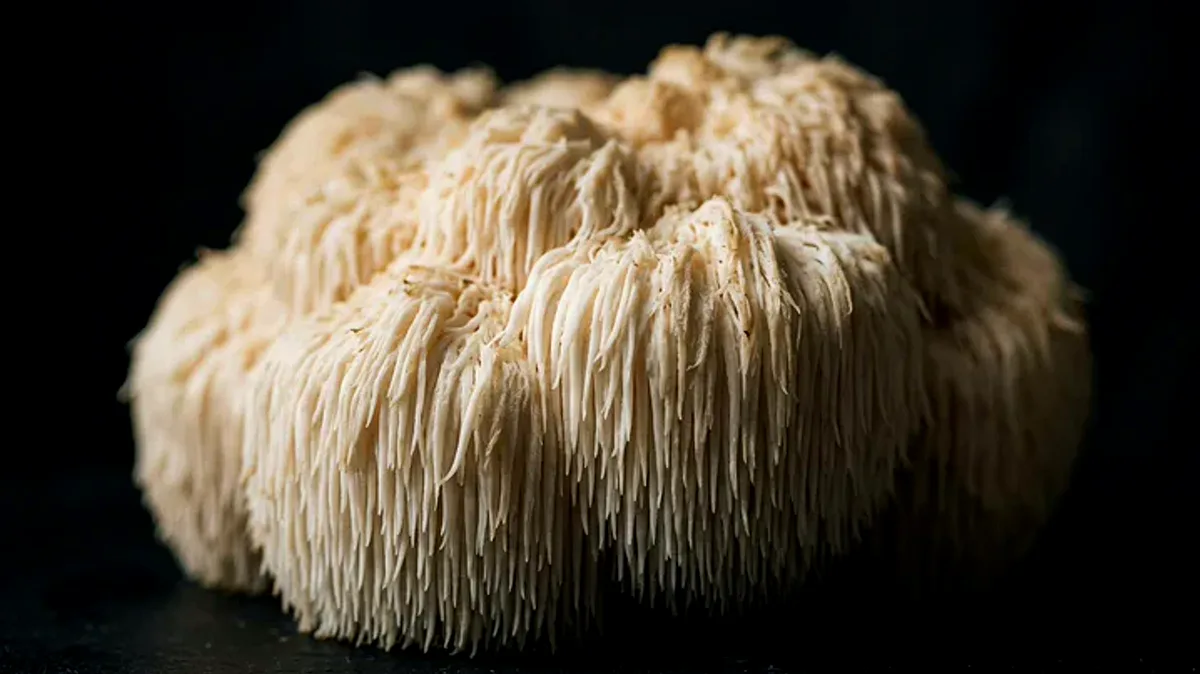
Lion's mane is a shaggy white mushroom used in Japanese tradition. A small 2009 study in older adults with mild memory complaints found better scores while they took it. It is one small study, so keep expectations modest.
Eucalyptus leaf, the smell many of us know from our grandmother's medicine cabinet, has compounds studied in the lab for how they slow the breakdown of acetylcholine, the runner. That research is in the lab, not yet in people.
Linda's 10-second morning routine
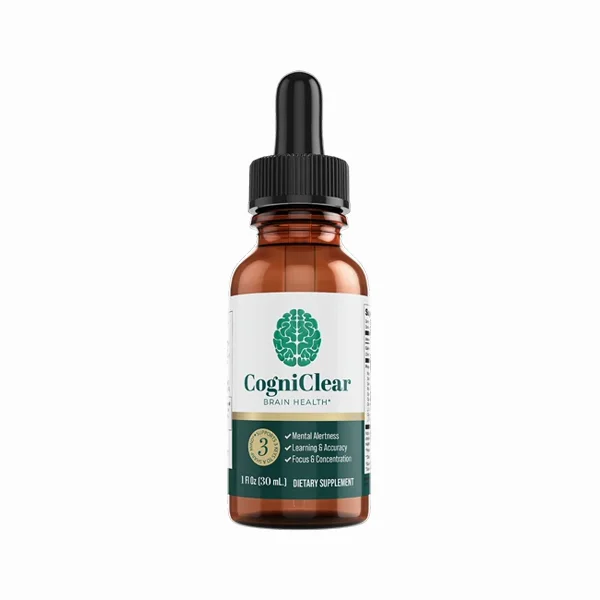
Linda did not want five bottles of pills. What she found was a liquid formula called CogniClear that combines all four, bacopa, phosphatidylserine, lion's mane and eucalyptus, in one dropper.
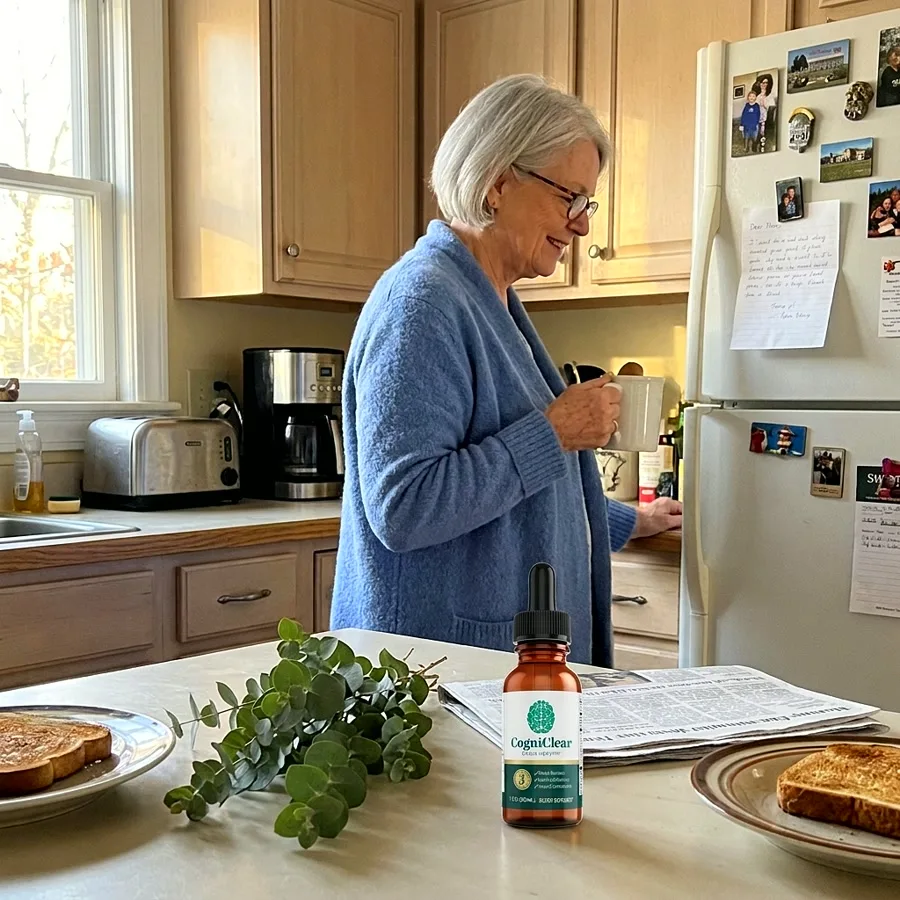
"I take it with my coffee before I turn on the news," she says. "Ten seconds. No pills to swallow."
She is careful about what she says next. "I'm not going to tell you it changed my life in a week. It didn't. The studies are three to six months, so I gave it time. What I can tell you is that this spring I noticed I wasn't reaching for words as much. I stopped dreading the phone calls with my sister. And this year I'm actually looking forward to Thanksgiving."
Is it right for you? Read this first
CogniClear is a dietary supplement. It is not a treatment for memory loss or dementia and it will not replace your doctor. If memory problems are getting worse, coming on fast or getting in the way of daily life, see a doctor: several causes, like low B12 or thyroid problems, are treatable.
If you take prescription medication, especially for blood pressure, thyroid, depression or memory, or a blood thinner, ask your doctor before starting any supplement.
And give it time. Nobody can honestly promise a date. That is why most people choose the three-bottle package and why it comes with a 90-day money-back guarantee.
The formula Linda uses: CogniClear Brain Health
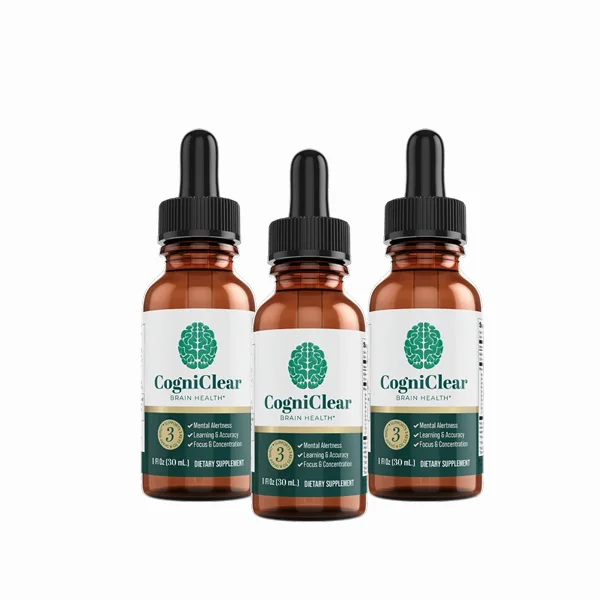
CogniClear is a dietary supplement that supports memory, focus and mental clarity as part of a healthy routine.*
- Bacopa monnieri
- Phosphatidylserine
- Lion's mane mushroom
- Eucalyptus
- One dropper in the morning, 30 mL per bottle
See how the 10-second routine works →Official CogniClear page · 90-day money-back guarantee
Where to get CogniClear
CogniClear is sold only through its official checkout, not in stores or on Amazon. Most people choose three bottles because the studies ran for twelve weeks or longer.
3 bottles$99 total$33 per bottle · 3-month supply
Choose 3 bottles
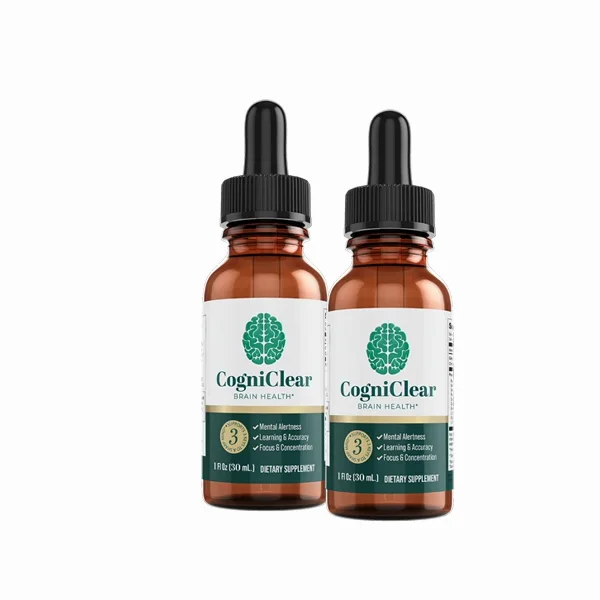 2 bottles$89 total$44.50 per bottle
Choose 2 bottles
 1 bottle$79 total1-month supply
Choose 1 bottle
Free US shipping. Your order includes automatic refills every 28 days at your package price until you cancel; cancel anytime by e-mail. Express shipping and a protection add-on are optional at checkout: untick them to pay only your package price.

90-day money-back guarantee
If CogniClear is not right for you, e-mail [email protected] within 90 days of your purchase with your order number and ask for a refund.
Questions readers ask
How do I take it?
With the dropper, once a day in the morning, as directed on the label.
Is this a treatment for memory loss or dementia?
No. CogniClear is a dietary supplement. It does not diagnose, treat, cure or prevent any disease. If memory problems are getting worse or getting in the way of daily life, see a doctor: several causes are treatable.
Is it safe with my medication?
Ask your doctor first, especially if you take medication for thyroid, blood pressure, depression or Alzheimer's disease, or a blood thinner.
How soon will I notice something?
Nobody can honestly promise a date. The studies ran for three to six months, and results vary. The 90-day guarantee gives you time to decide.
- Stough C. et al. The chronic effects of an extract of Bacopa monniera (Brahmi) on cognitive function in healthy human subjects. Psychopharmacology, 2001.
- Kato-Kataoka A. et al. Soybean-derived phosphatidylserine improves memory function of the elderly Japanese subjects with memory complaints. Journal of Clinical Biochemistry and Nutrition, 2010.
- Mori K. et al. Improving effects of the mushroom Yamabushitake (Hericium erinaceus) on mild cognitive impairment: a double-blind placebo-controlled clinical trial. Phytotherapy Research, 2009.